
Foodware for everyday use.
Use it well. Make it last. Waste less.
The practical guide to living with foodware: the plates, cups, cutlery and lunch boxes used every day in Malaysian homes and small food businesses.
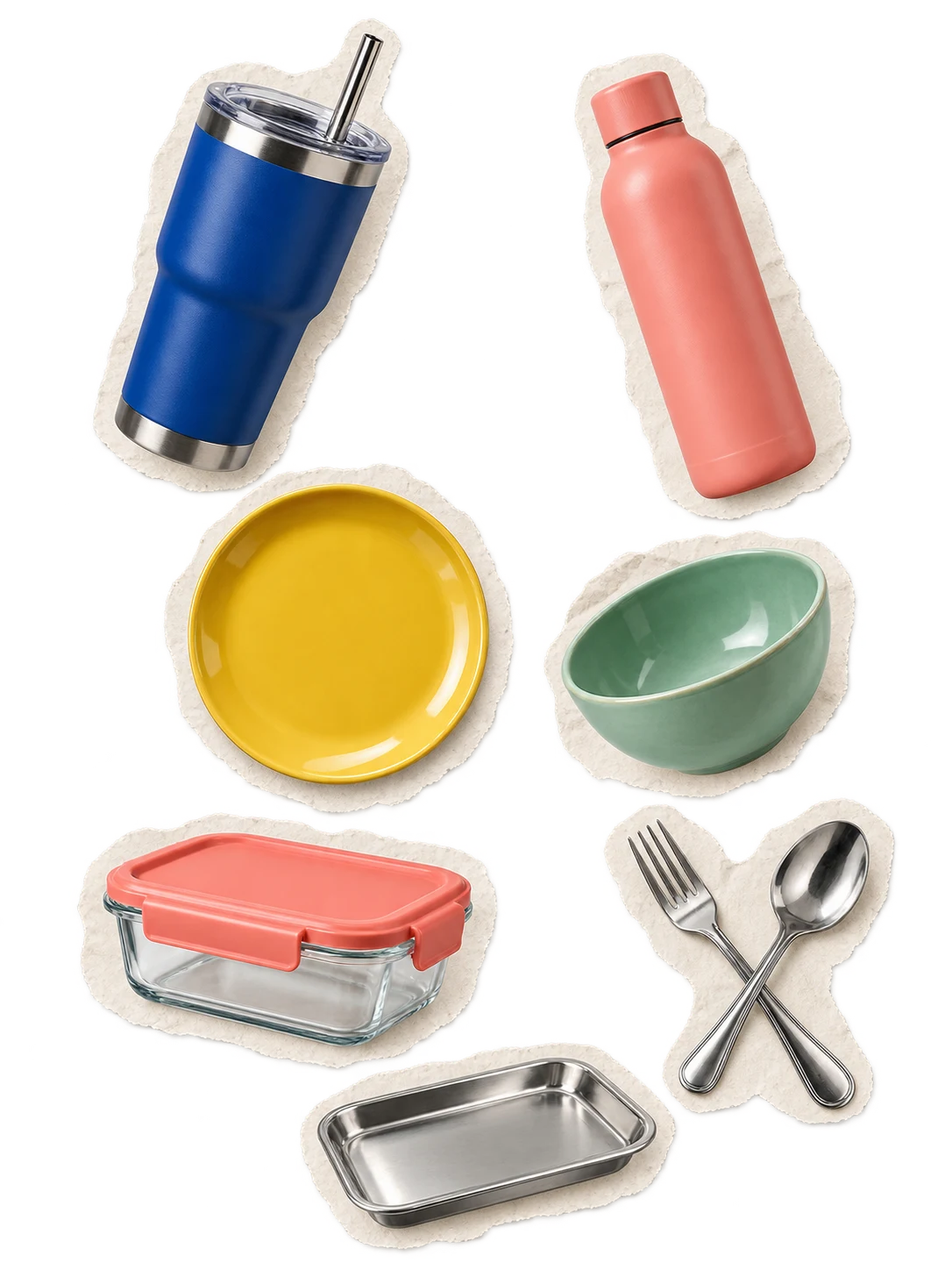
Start with what you already own. The most useful plate, bottle or lunch box is usually the one already in your kitchen.
02 / Practical care guides
Practical guides for everyday foodware.
Take the lid apart.
Drinkware
Odours and residue usually build up in the lid, not the cup.
Read the care notes
Applies to: bottles and tumblers with removable lids, sliders, straws or seals.
- Remove only the parts your product’s instructions say are removable.
- Wash each part in warm, soapy water. Use a small brush for grooves and straw channels.
- Let every part air-dry fully before you put the lid back together.
Forcing out a fixed seal can damage it and cause leaks. When in doubt, follow the care label for your own bottle.
Wash, dry, then close.
Lunchware & containers
Containers last longer when they are fully dry before the lid goes on.
Read the care notes
Applies to: plastic, glass and stainless steel lunch boxes and food containers.
- Rinse soon after use so food does not dry on.
- Wash with warm, soapy water and a soft sponge. Abrasive pads can scratch the surface.
- Dry the container, the lid and the seal groove before closing or storing.
- Store with the lid off or resting loosely so trapped moisture can escape.
Check the base or label for dishwasher and microwave markings before using either.
Check the markings before you heat.
Tableware & cutlery
Not every plate or bowl is made for the microwave, oven or dishwasher.
Read the care notes
Applies to: plates, bowls and serving dishes.
- Look for care markings on the base or the label: microwave, dishwasher or oven.
- If there is no marking, do not assume the piece is microwave- or oven-safe.
- Avoid sudden temperature changes, such as setting a hot dish on a cold, wet surface.
- Stop using pieces that are cracked or chipped.
When the care instructions are unclear, ask the seller or maker instead of guessing.
03 / Everyday care
Living with foodware.
- 01
Use it well
Match the item to the job, and check the material and care markings before heating food or using the dishwasher. - 02
Make it last
Clean and dry every part, store it properly, and check seals and surfaces for wear before small problems become big ones. - 03
Waste less
Use what you already own before buying more, and reach for a reusable cup, bottle or lunch box instead of a disposable one.
04 / About the guides
What our guides cover.
Brand-neutral guidance for the foodware you already have.