How to check foodware care instructions before microwaving or dishwashing
It is lunchtime in the office pantry, and your tapau is still in its thin takeaway box. Can it go straight into the microwave? What about the lunch box...
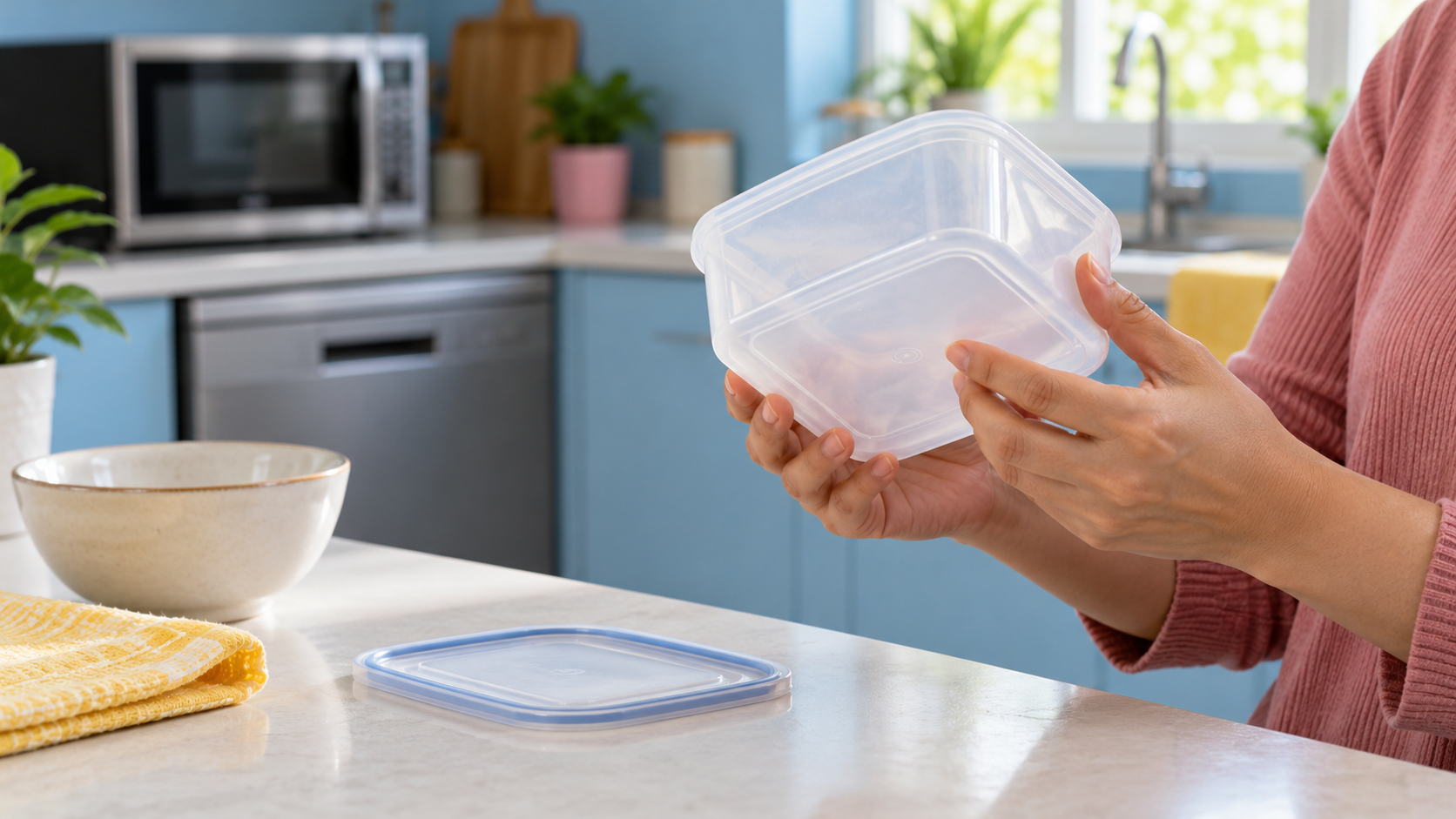

It is lunchtime in the office pantry, and your tapau is still in its thin takeaway box. Can it go straight into the microwave? What about the lunch box...
It is lunchtime in the office pantry, and your tapau is still in its thin takeaway box. Can it go straight into the microwave? And can the lunch box your child brings home every afternoon go in the dishwasher? If you reuse lunchware in Malaysia, at home, at school, in a hostel or at the office, the answer is in that item's foodware care instructions, and this guide shows you how to check them.
Before you microwave or dishwash any container, find the foodware care instructions for that exact item. Check the base, lid, seal and clips separately, and treat microwaving and dishwashing as two different questions. If the guidance is missing or unclear, ask the maker. Until they reply, reheat your food in a dish you already know is suitable.
This guide is for people in Malaysia who use reusable lunchware every day: parents packing school lunch boxes, students sharing a hostel microwave and working adults reheating lunch at the office. It also helps small food businesses that wash reusable containers for staff or customers.
The wrong container can fail under heat. The U.S. Food and Drug Administration says some plastic containers can melt from the heat of the food inside them. It also says metal pans and foil reflect microwaves, which can make food cook unevenly and may damage the oven (FDA). Health Canada adds that packaging which is not microwave-safe could melt or warp, and chemicals could leach into the food (Health Canada).
Checking also cuts waste. When you know what each item can handle, you are less likely to damage it by mistake or replace things you do not need to. Lids and seals are easy to overlook, so they have their own section below.
Containers can look tough and still fail under heat, wear or a hot wash. The sources below describe some of the risks.
All of this is general guidance. It does not guarantee how any particular product will behave. The instructions for your own item always come first.
Most foodware care instructions are in one of four places: on the item, on packaging you kept, on the maker's website or, for microwave use, in the oven's own manual. Check them in that order.
Turn the item over and look at the underside of the base. Then check the inside and top of the lid, any text moulded into the plastic and any printed stickers. USDA FSIS notes that glass, ceramic and plastic containers that are safe to use in a microwave will usually be labelled for microwave use (USDA FSIS).
Look through any sleeves, cards or leaflets that came with the item. If you have not thrown them away yet, take a photo before you do. A photo on your phone is easier to find than a leaflet in a kitchen drawer.
Many makers publish use-and-care pages, FAQs or downloadable PDF guides. Search using the product name, range name or model code printed on the item or its packaging.
The FDA says the instructions that come with each microwave oven list the kinds of containers to use. They also explain how to test whether a container can go in that oven. The FDA advises following the manual for your specific model (FDA). If you reheat in a shared office or hostel pantry, the same applies to that microwave's manual.
According to a summary by ChemLinked, Malaysia regulates food packaging mainly through Part VI ("Packages for Food") of the Food Regulations 1985, overseen by the Ministry of Health's Food Safety and Quality Division. The summary says these rules ban packaging that makes food harmful to health or passes toxic substances such as lead, antimony, arsenic or cadmium into food (ChemLinked).
A regional overview by REACH24H adds that the rules include controls on specific materials and substances. Examples are lead and cadmium migration limits for ceramics based on MS ISO 6486-1, and limits on vinyl chloride monomer (REACH24H).
These rules are not consumer care instructions. They do not tell you whether your own lunch box can go in the microwave or which dishwasher rack to use. That guidance has to come from the item's maker.
Markings vary between makers and regions. A symbol on one item may not mean exactly the same thing on another, so do not assume it does.
If the item's own wording or the maker's own key does not confirm it, treat it as unconfirmed.
Microwave and dishwasher rules can differ between parts of the same product. Health Canada lists lids and wraps separately from containers in its advice on using microwave-safe items (Health Canada).
The examples below come from individual makers' guidance. They show what to look for and apply only to those items.
Part What to check Example from maker or authority guidance Source Base Microwave rating, any wattage limit and dishwasher rating One maker of a stainless steel food box says the base is microwave-safe in ovens up to 1000 watts, and it lists the boxes as dishwasher-safe. Stainless steel food box maker's FAQ Lid Whether it can stay on during heating or must come off The same maker says that box's lid is not microwave- or oven-safe and must be removed before reheating. Stainless steel food box maker's FAQ Seal or gasket Whether it comes out, and how to wash it One maker of clip-lid plastic containers says to take the flexible seal out of the lid and wash it separately for a thorough clean. Clip-lid container maker's use and care page Lid on a dishwasher-safe set Whether the dishwasher rating covers every part One food-storage container maker says its containers are dishwasher-safe but recommends washing the lid by hand to protect the seal. Food-storage maker's use and care guide Clips, bands and vents Which small parts have their own rules One bento-style lunch box maker says every part except the elastic band can go on the upper rack of the dishwasher. It also says to open the lid tab so steam can escape when microwaving. Bento box maker's maintenance pageCovering food needs care too. Health Canada says to use a microwave-safe lid or wrap that does not touch the food, and to leave a small gap so steam can escape (Health Canada).
When you check one part, check them all. Do not assume the lid follows the same rules as the base.
If you are wondering how to check if a container is microwave safe, work through these steps in order. Each explains what to check and why.
The time and wattage figures above belong to specific items from specific makers. Do not apply one maker's figures to a different container.
A microwave-safe rating does not answer the dishwasher question, and a dishwasher-safe rating does not answer the microwave question. Check each one on its own. The stainless steel food box example shows why: the maker lists the boxes as dishwasher-safe and rates the base for the microwave, but says the lid must not go in the microwave (maker's FAQ).
Read what the dishwasher rating covers. With some dishwasher-safe containers, the rating applies to the containers, but the maker still recommends washing the lid by hand to protect the seal (food-storage maker's guide).
If an item is marked "top rack dishwasher safe" or "top rack only", wash it on the upper rack. One maker of plastic lunch containers says its containers are safe in normal household dishwashers on the top rack only. It adds that they must be secured so they cannot touch the heating element and melt (lunch container maker's use and care PDF). In practice, place light containers so they cannot flip over or fall through the rack.
Appliance-maker guidance warns that thin or disposable plastics can melt in a dishwasher and that wooden items can crack or warp. It recommends looking for the maker's dishwasher-safe marking. Where markings are unclear, for example on some wooden or composite items, it says to check with the maker first (appliance-maker guidance).
Some maker guidance specifically refers to "normal household dishwashers" (lunch container maker's use and care PDF). If your cafe, stall or office canteen uses a commercial dishwasher, do not assume household guidance applies. Ask the maker before washing reusable containers belonging to customers or staff in that machine.
These checks apply to everyday Malaysian lunch routines, whether you are packing a child's lunch box, sharing a hostel microwave or trying to reheat tapau food in the office microwave. In every case, check that item's own instructions first.
Situation What to check Safer next step Source Tapau nasi campur in a foam (polystyrene) box or thin plastic takeaway container Whether the packaging is microwave-safe. Health Canada says to take food out of packaging that is not microwave-safe, such as foam trays or some plastic containers, because it could melt or warp and chemicals could leach into the food. Move the food to a microwave-safe plate or dish before heating. Health Canada Leftovers in a reused margarine or kaya tub Whether it is a cold-storage tub. USDA FSIS says cold-storage containers such as margarine tubs are not approved for cooking. Treat a spread tub used the same way just as cautiously. Move the food to a suitable dish before heating. If the tub is still in good condition, keep using it only for cold storage. USDA FSIS Child's school lunch box with a clip lid and seal Read the lunch box care instructions for each part. Does the seal come out? Is the lid allowed in the microwave? Remove the seal to wash it. If the maker allows heating, open the clips before microwaving. Clip-lid container maker's use and care page Stainless steel tiffin or food box (mangkuk tingkat style) Metal reflects microwaves and may damage the oven. However, some makers rate specific stainless steel items for microwave use, with limits. Do not microwave it unless its maker says you can. If they do, follow their wattage and lid rules. FDA; stainless steel food box maker's FAQ Shared hostel or office microwave The power of that particular oven, from its manual or rating label. Make sure the oven does not go over any wattage limit your container's maker sets. FDA; bento box maker's maintenance pageAt work, keep one plate or dish that you have confirmed is microwave-safe. Then, whatever your tapau comes in, you always have a suitable dish for reheating, and you avoid adding another disposable container to the bin.
Older items, gifts and hand-me-downs often have no leaflet and worn markings. Follow these steps instead of guessing.
When the maker replies, ask for the manufacturer care instructions in writing, such as an email or a link to a use-and-care page, so you can save them.
Unclear heating guidance does not mean the item is useless. If it is in good condition, it can often still do jobs that suit it, such as cold storage or carrying dry snacks. Buying a replacement should not be your first answer.
Following each item's instructions helps it last. That supports reuse and means fewer disposables in your daily routine.
Only if it is labelled microwave-safe. If not, move the food to a suitable dish first. Health Canada and USDA FSIS both advise against heating food in packaging or cold-storage containers that are not meant for the microwave (Health Canada; USDA FSIS).
Not necessarily. One stainless steel food box maker rates the base for the microwave but says the lid must be removed before reheating (maker's FAQ). Health Canada also lists lids separately from containers (Health Canada).
Not always. Some makers say top rack only and ask you to secure items so they cannot touch the heating element (lunch container maker's use and care PDF).
Follow the steps in the section on missing or unclear instructions above. Identify the item, search the maker's pages and contact the maker. Until you have an answer, reheat in a dish you know is suitable.
Check foodware care instructions before you reheat or wash, while they can still help you avoid damage. This week, pick the one container you use most for lunch. Check each part (base, lid, seal and clips) and save a photo or link to its instructions on your phone. When you have a few spare minutes, do the same for the next item.